

Types of Pearls: Freshwater, Baroque, and What Actually Matters
Pearls are the only material I work with that was made by a living animal rather than by geology, and that difference shows in everything about them — how they look, how they wear, and how much care they need. Here is what the categories actually mean, and what I look for when I am choosing them.
How a pearl forms
A mollusk responds to an irritant inside its shell by coating it, layer after layer, with nacre — the same iridescent material that lines the shell itself. A pearl is essentially hundreds of those layers built up over months or years. The way light passes into those layers and bounces back out is what produces the glow.
Almost every pearl sold today is cultured, which means the irritant was introduced deliberately rather than by accident. Cultured does not mean imitation, and I want to be clear about that because the word puts people off unnecessarily. It is a real pearl, grown by a real mollusk, in exactly the way a pearl has always formed. The only difference is that somebody started the process on purpose.
Freshwater and saltwater
- Freshwater pearls grow in mussels in lakes and rivers, overwhelmingly in China. A single mussel can produce many pearls at once, which is why they are more plentiful and more affordable. They come in a wonderful range of natural shapes and soft colors — white, cream, peach, lavender, gray.
- Saltwater pearls grow in oysters, usually one at a time. Akoya are the small round white ones most people picture; Tahitian are the dark grays and greens; South Sea are the large golden and white ones. Fewer per oyster, years longer to grow, and priced to match.
I work almost entirely in freshwater pearls, for a straightforward reason. Their variety of shape and color suits one-of-a-kind pieces far better than a perfectly matched strand does. If every pearl were identical I would have nothing to choose between, and choosing is the part of this work I enjoy most.
What “baroque” actually means
Baroque simply means not round. That is the entire definition. A baroque pearl might be oval, teardrop, coin, stick, or wildly irregular with ridges and folds and no symmetry at all.
For a long time baroque pearls were treated as seconds — the ones that did not come out right. That has completely reversed, and deservedly so. An irregular pearl catches light across many more surfaces and angles than a sphere does, so it is livelier in motion. And because the shapes are accidents of growth, no two are ever alike. If you want a pearl that looks like nobody else’s, baroque is the answer, and it is where I spend most of my time.
Luster is the thing to judge
If you take one thing from this: luster matters more than roundness, size or color.
Luster is the sharpness of the reflection on the pearl’s surface. On a good pearl you can nearly make out your own outline in it, and the light looks like it is coming from inside the pearl rather than sitting on top of it. On a poor one the surface looks chalky, flat and slightly dead, no matter how perfectly round it is.
A slightly irregular pearl with superb luster will always look more expensive than a perfectly round one without it. So hold any pearl under a light and look at the reflection before you look at the shape. It is the quickest way to tell a good pearl from an ordinary one, and it costs nothing to learn.
Pearls as a June birthstone
Pearl is a June birthstone, alongside moonstone and alexandrite. That is the reason you will find pearl and moonstone paired in several of my pieces — a June birthday can be given two of its own birthstones in a single necklace.
They also simply belong together. Both have a soft, internal light rather than a hard sparkle, so neither one fights the other for attention. If moonstone interests you, I have written about it in more detail in the moonstone guide.
One important warning
Pearls are soft — roughly 2.5 to 4.5 on the Mohs scale — which puts them among the softest things anybody wears. They are also vulnerable to acid, and that includes perfume, hairspray and ordinary perspiration.
They need more care than any gemstone in the collection, and the care is genuinely simple once you know it: on last, off first, wiped with a soft cloth, stored dry and apart from harder stones. The full routine is in my guide to caring for handmade jewelry, and if you own pearls it is worth the two minutes.
Common questions about pearls
How can you tell if a pearl is real?
The oldest test still works: rub the pearl gently against the edge of a tooth. A real pearl feels faintly gritty because nacre has a crystalline texture; a glass or plastic imitation feels perfectly smooth. Real pearls are also never identical to one another, they feel cool when you first pick them up, and the drill holes are clean and sharp rather than chipped or flaking.
Are freshwater pearls real pearls?
Yes, entirely. Freshwater pearls are grown by real mussels and are made of the same nacre as any saltwater pearl. They are more affordable because a single mussel can produce many pearls at once, not because they are a lesser material. Nearly all the pearls I use are freshwater, for the variety of shape and color they offer.
What is a baroque pearl?
A baroque pearl is simply one that is not round — oval, teardrop, coin, stick, or entirely irregular. They were once treated as seconds. That has reversed, and deservedly: an irregular pearl catches light across far more surfaces than a sphere does, and no two are ever alike.
Do pearls need special care?
More than any other material I work with. Pearls are soft, around 2.5 to 4.5 on the Mohs scale, and vulnerable to acid — which includes perfume, hairspray and perspiration. Put them on last, take them off first, wipe them with a soft cloth after wearing, and never put them in an ultrasonic cleaner.
My pearl pieces
Pearl runs through more of the collection than any other material. A few to start with:
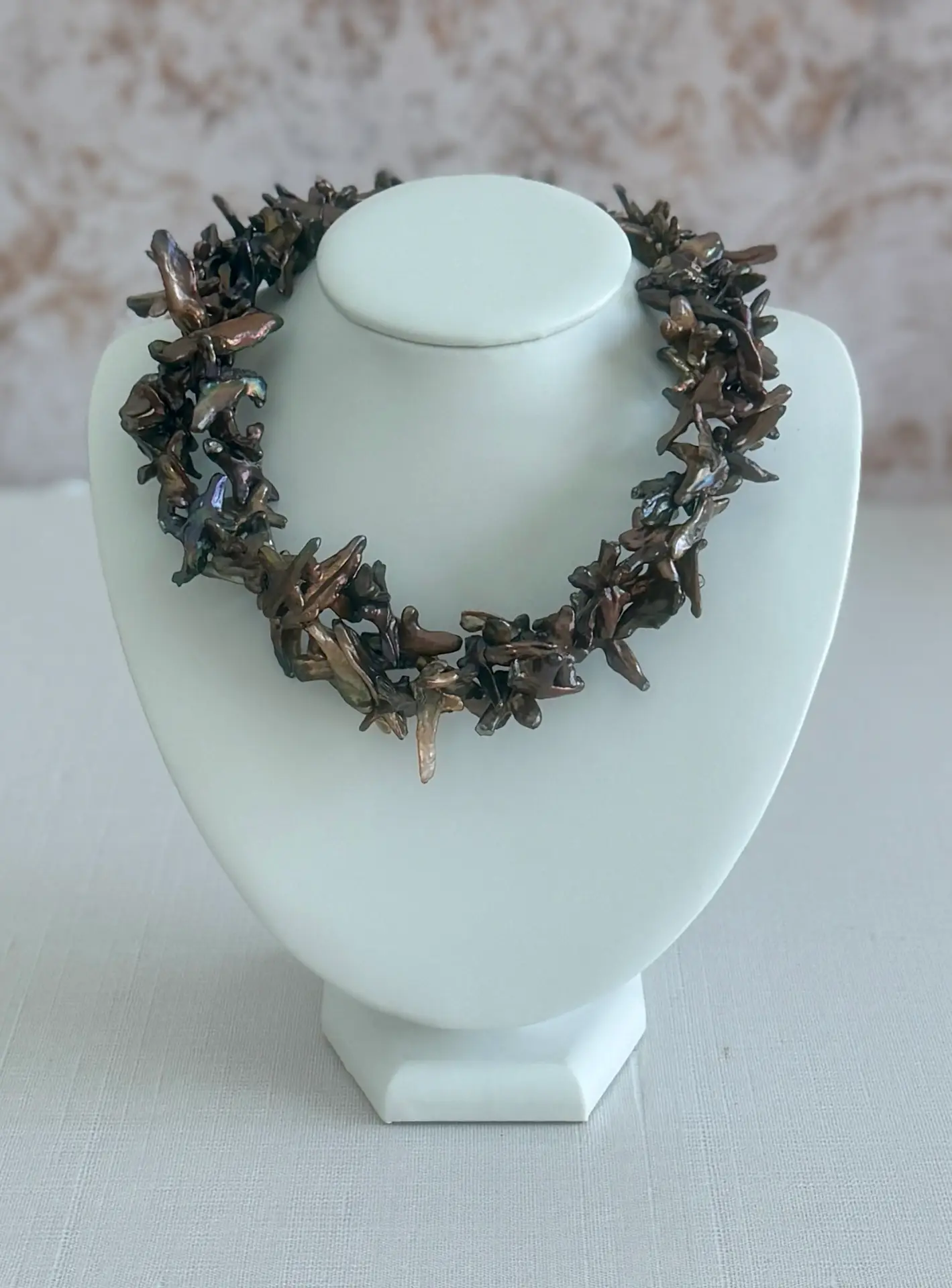 Brown Baroque Pearl NecklaceTwo strands, 106 cross-shaped baroque pearls
 Chunky Gold Chain Necklace with Baroque Pearl
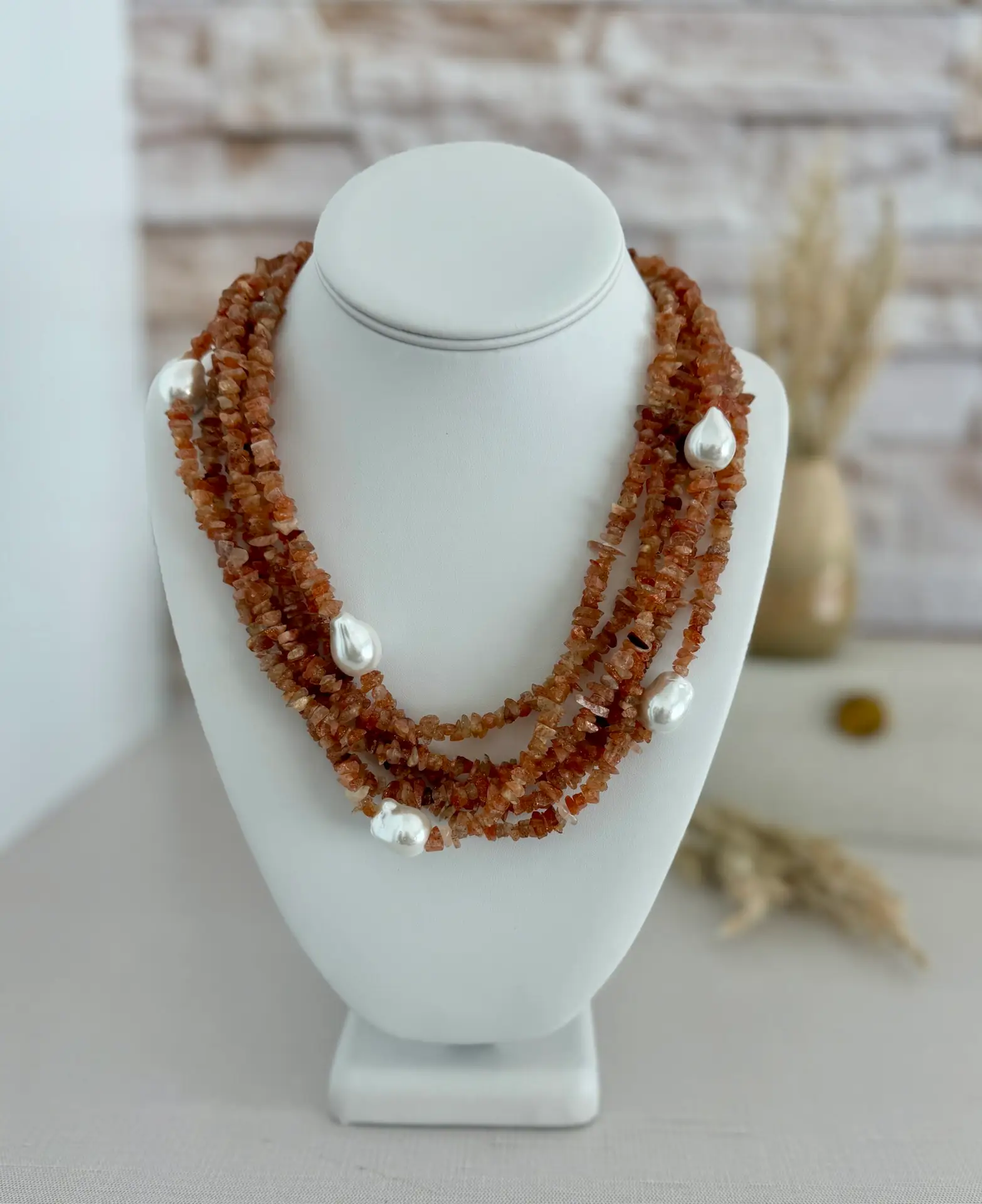 Layered Gemstone Necklace with PearlsSix strands scattered with baroque pearls
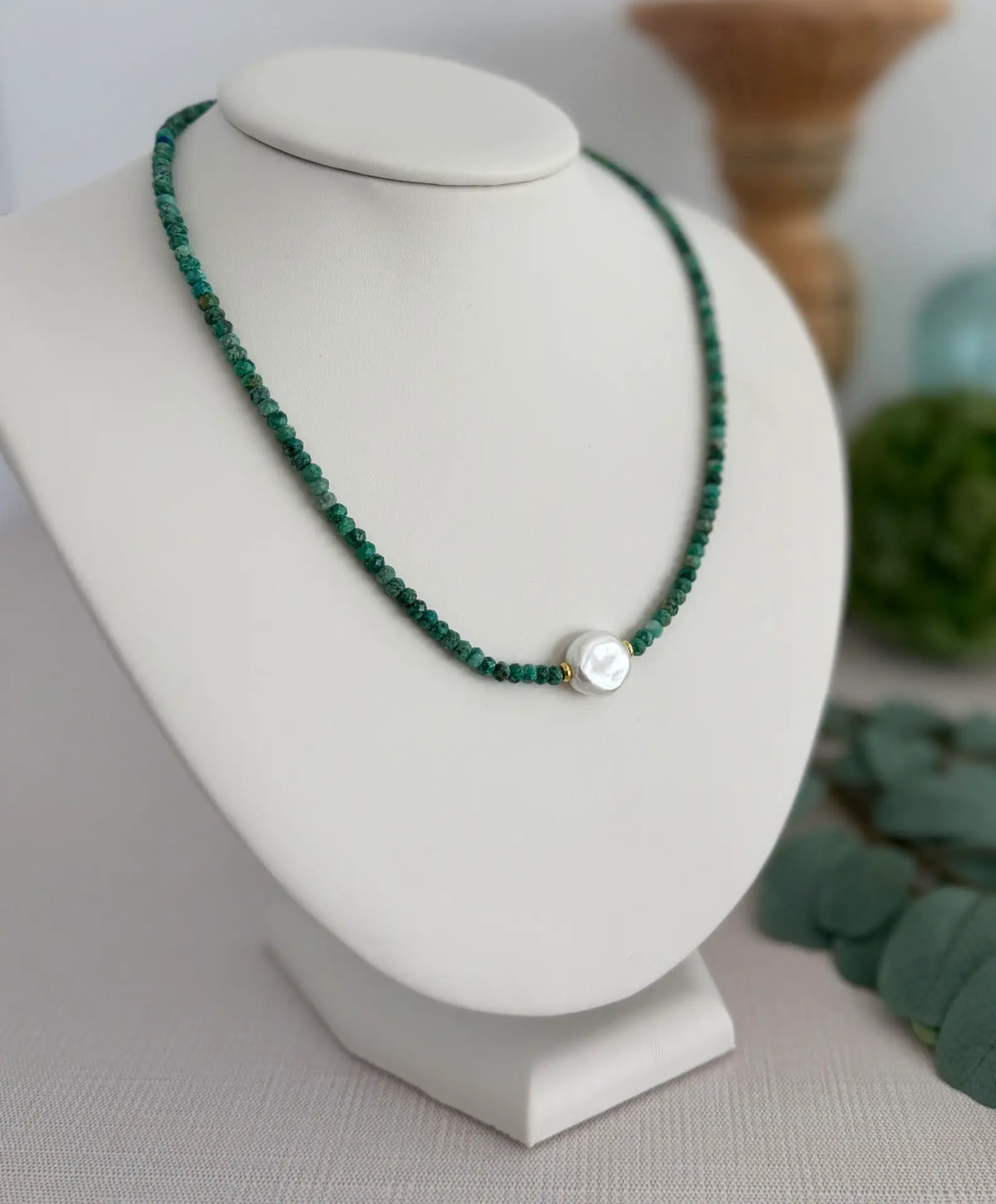 Turquoise Gemstone and Pearl Necklace
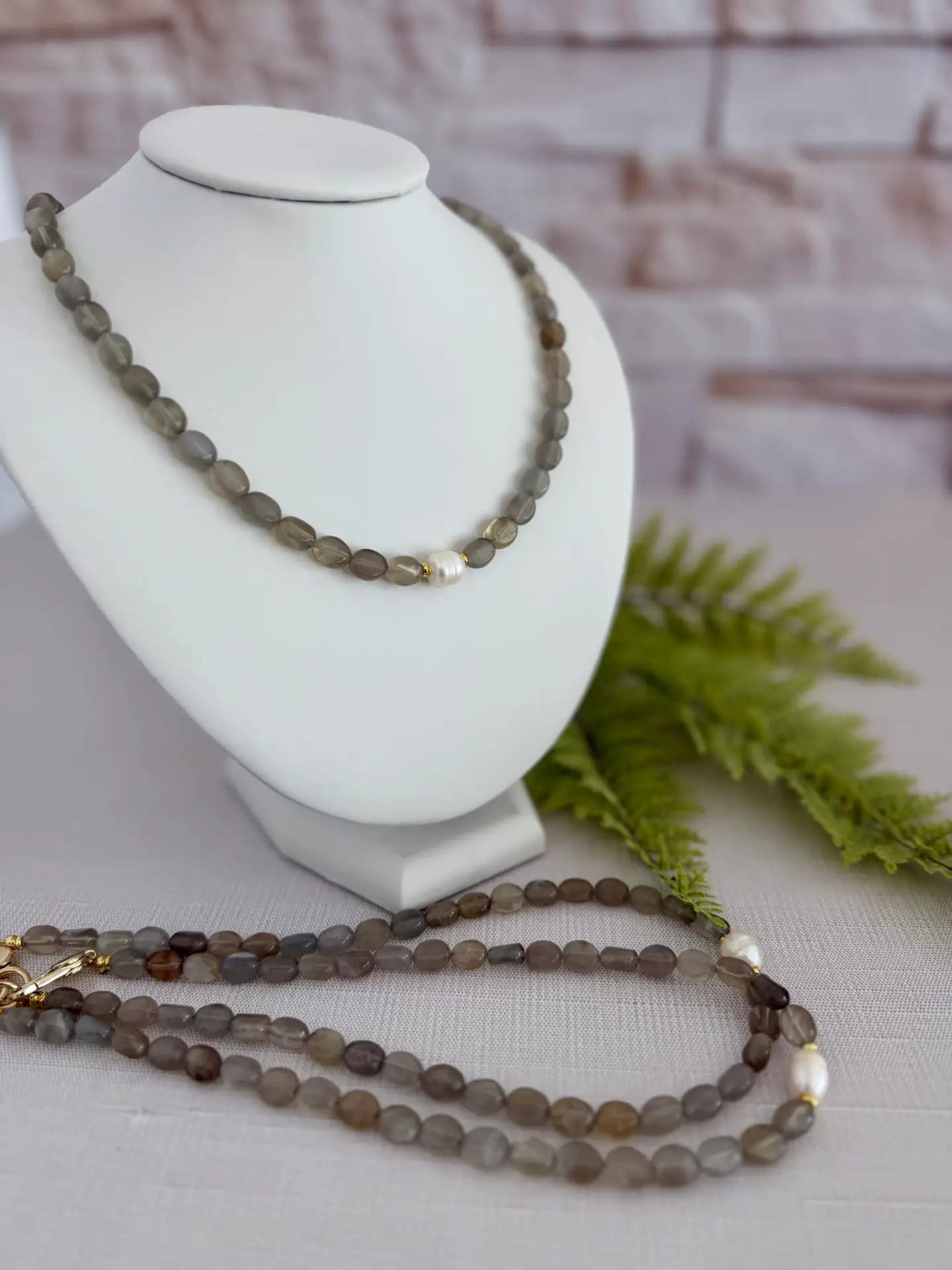 Smokey Quartz and Pearl Necklace
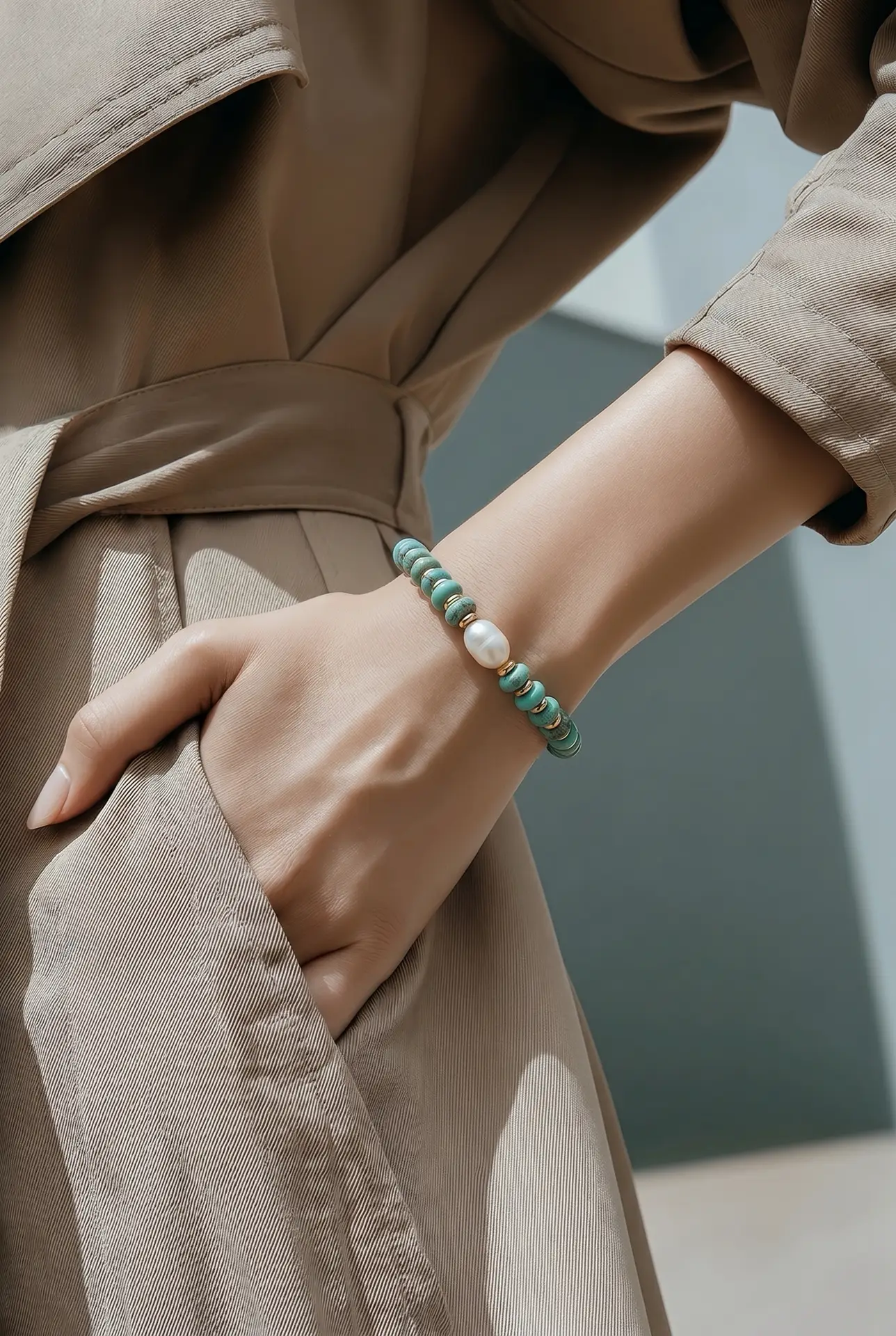 Aqua Turquoise and Pearl Bracelet
See the rest in the shop.

Linda Miller is the designer behind Maude & Grace, named for her two grandmothers. She makes every piece by hand, one of a kind, pairing natural gemstones with artisan leather. Choosing the colors that best show off each stone is her favorite part of the work.