
How to Layer Necklaces Without It Looking Cluttered
Layering looks effortless and almost never is. The difference between a layered look that works and one that tangles into a pile by lunchtime is mostly arithmetic — lengths and spacing. Here is how I think about it when I am putting pieces together.
Know the standard lengths
Necklace lengths have conventional names, and knowing them makes every other decision easier:
- Choker — 14 to 16 inches, sits at the base of the neck
- Princess — 17 to 19 inches, sits on or just below the collarbone. Much the most common length.
- Matinee — 20 to 24 inches, sits a little lower on the chest
- Opera — 28 to 36 inches, sits at or below the bust
- Rope — 36 inches and up, usually intended to be doubled or knotted
Most of my necklaces fall in the 16 to 18 inch range, which is the easiest zone to wear, with the lariats running considerably longer. Each listing gives the measurement, so you can plan a stack before you buy rather than hoping.
The spacing rule
Leave at least two inches between each layer. If you remember one thing from this page, make it that.
Less than two inches and the pieces fight each other — they overlap awkwardly, they tangle, and they never quite settle where you put them. Two to four inches and each necklace reads as its own thing, with a little space to breathe.
So a 16, an 18 and a 20 make a clean three-layer stack. A 17 and an 18 do not; those two will sit on top of one another all day and you will spend the evening separating them. This is why I list the length on every piece.
Vary the weight, not just the length
Three necklaces of identical thickness at three different lengths tends to look like a mistake rather than a decision. Give the eye somewhere to land:
- Put the most delicate piece shortest and the boldest longest. It reads as deliberate, and it keeps the heaviest element from crowding your throat.
- Mix textures — a faceted gemstone strand next to a plain chain, or a smooth pearl next to a beaded one. Contrast is what makes a stack look considered.
- Anchor with one pendant, not three. One focal point is a look. Three is a competition, and nobody wins it.
Odd numbers usually win
Two necklaces often read as indecisive — as though one of them was meant to come off before you left the house. One or three almost always looks more intentional than two.
This is not a law and I break it regularly, particularly when one of the two is a genuine statement piece. But if a two-necklace stack is not quite working and you cannot say why, try adding a third at a different length and weight before you give up on the combination. It is usually the fix.
Let one thing be the star
If a piece is genuinely a statement — a large focal stone, a heavy baroque pearl, a bold pendant — it is usually better worn alone. Layering is for pieces that are lovely but quiet on their own.
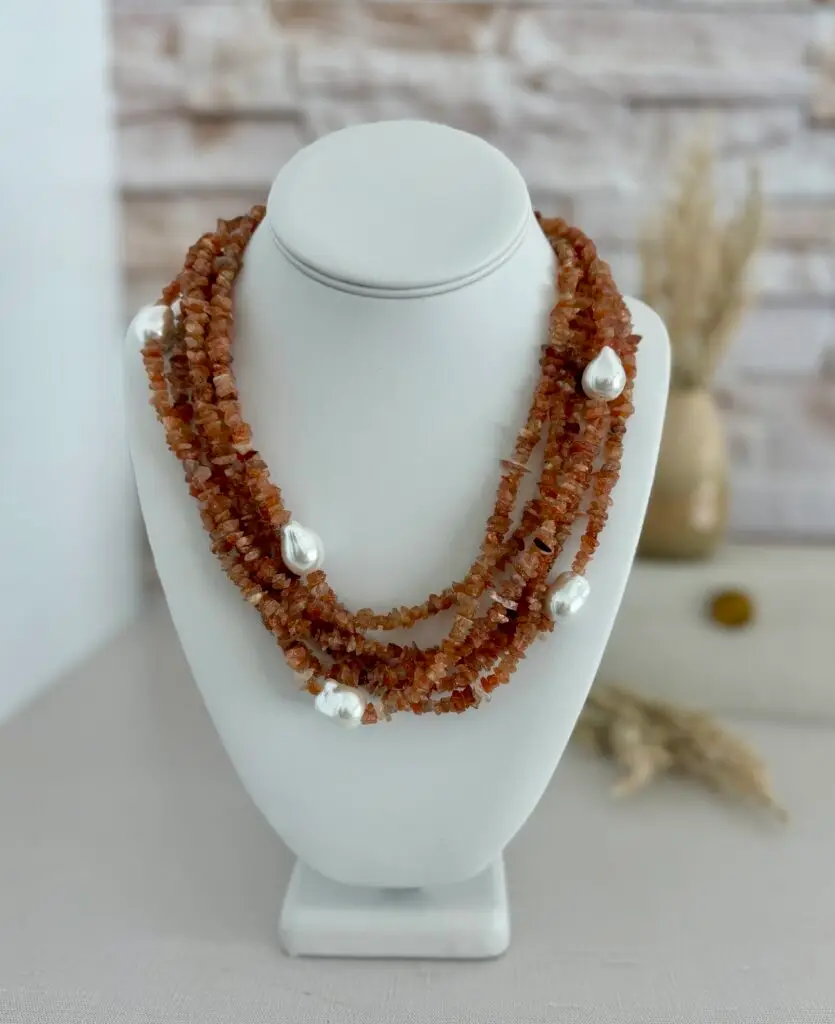
A statement necklace is already doing the job you would be layering to achieve, and adding to it tends to subtract. The Brown Baroque Pearl Necklace is a good example: two strands and 106 pearls is already a stack. Put something else over it and you cannot see either one.
Use a lariat to cheat
A long lariat is the easiest layering piece there is, because it can be worn at several different lengths without you owning several necklaces. Doubled, it becomes two layers by itself. Knotted, it shortens to wherever you like it. Left long, it is a single dramatic line.
Both the Czech Crystal Lariat with Peach Moonstone and Blue Apatite and the 40 inch Czech Crystal and Apatite Lariat are built for this. If you are new to layering and want one piece that teaches you what you like, start with a lariat.
Pieces that layer well together
A few that are made to sit alongside something else rather than carry a look alone:
 Dainty Aquamarine Short NecklaceAn ideal shortest layer
 Aquamarine and Citrine 16” Necklace
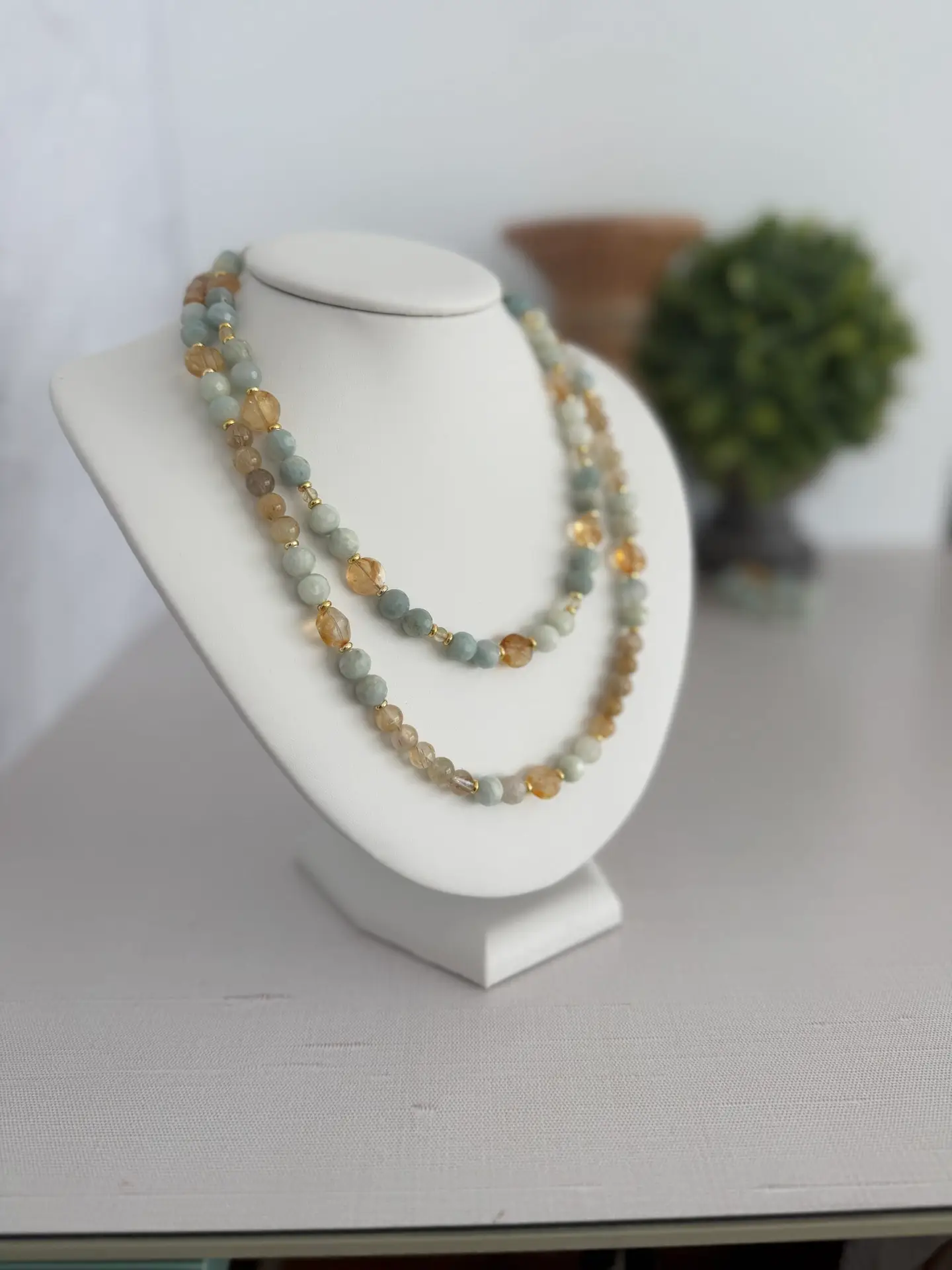 Aquamarine and Citrine 18” NecklaceTwo inches apart from the one above, deliberately
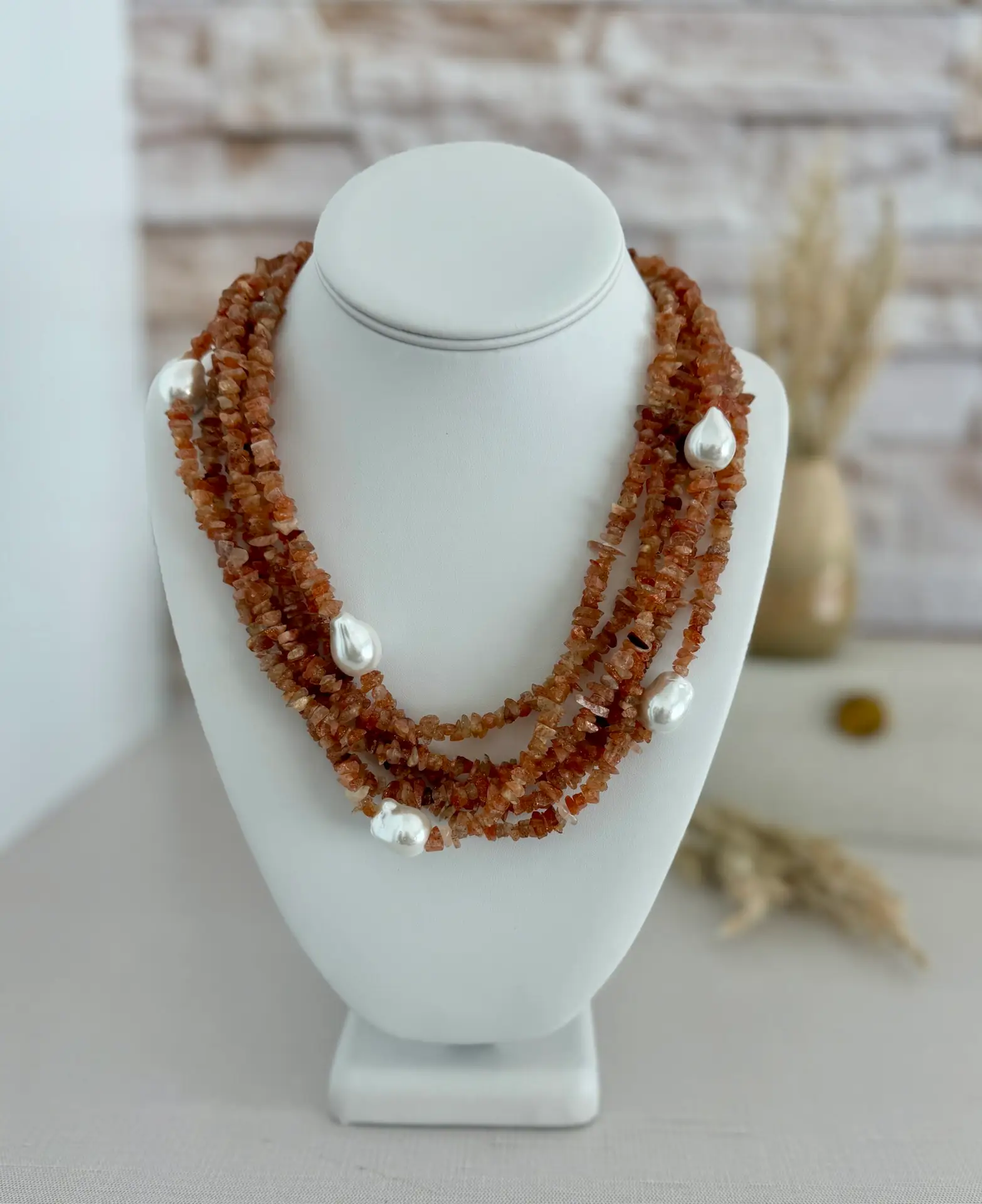 Layered Gemstone Necklace with PearlsSix strands, already layered for you
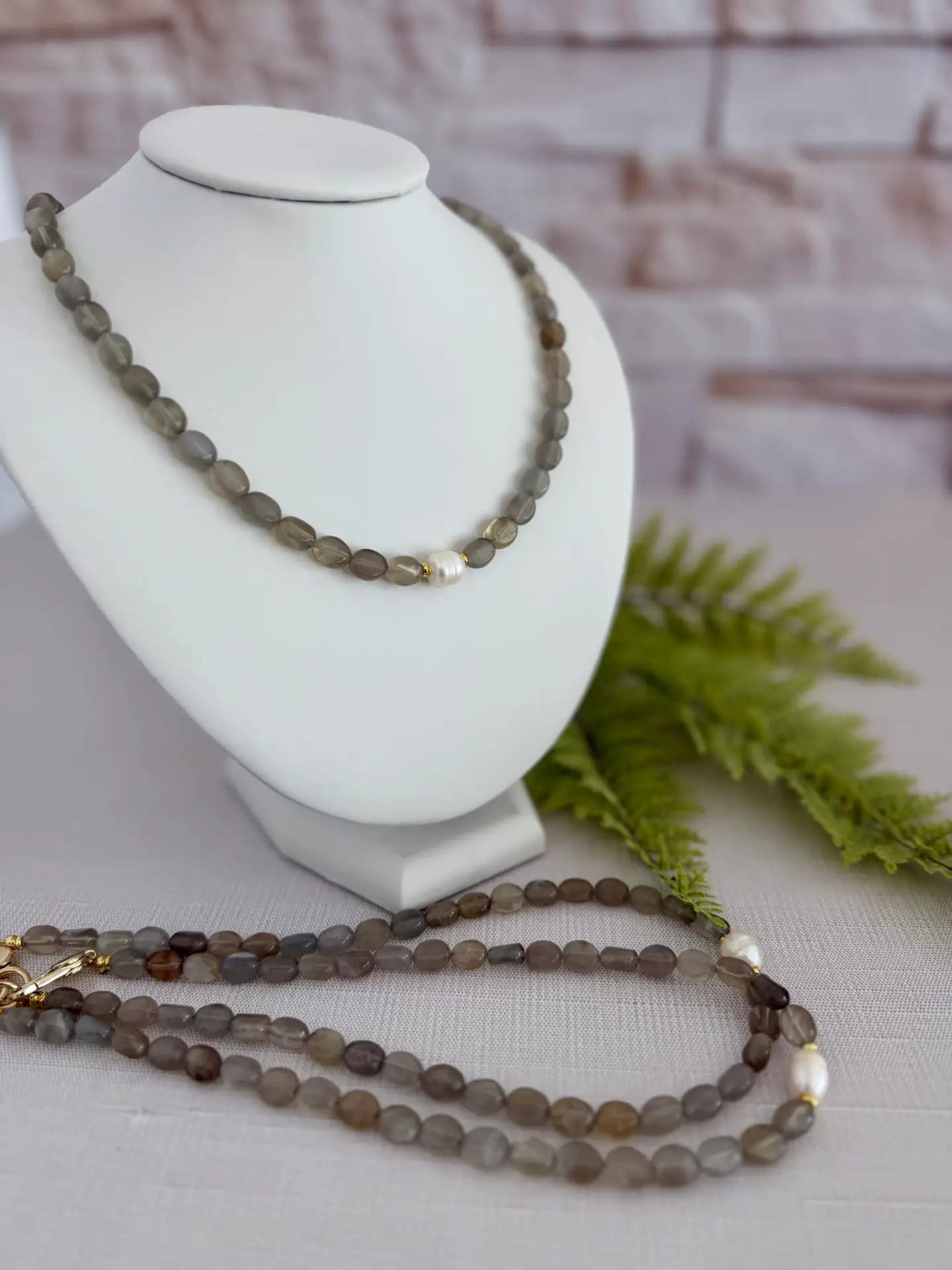 Smokey Quartz and Pearl Necklace
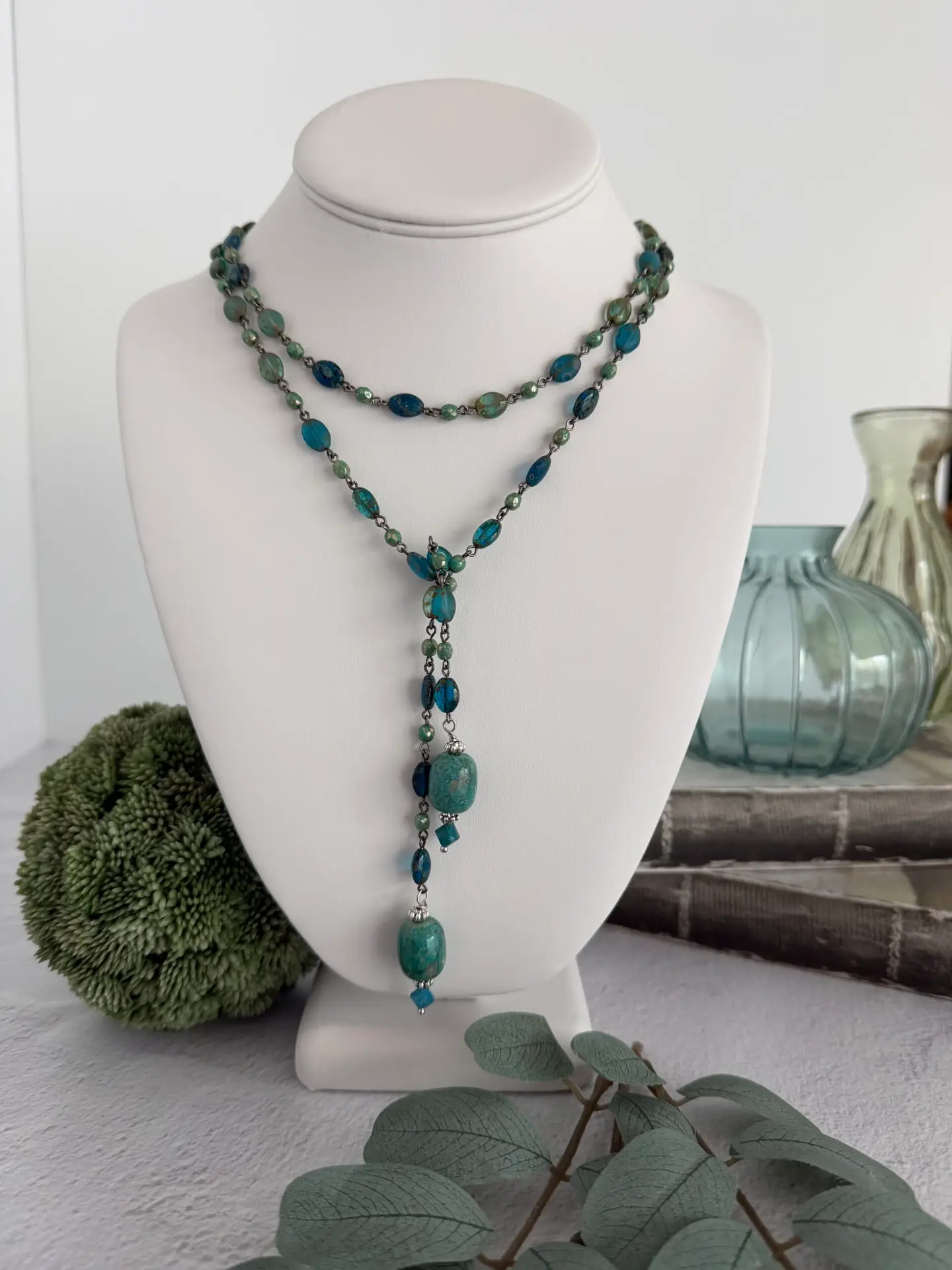 Czech Crystal and Apatite 40″ Lariat Necklace40 inches — double it, knot it, or wear it long
One practical warning
Layered pieces rub against each other all day, and the softer stones lose that fight every time. Pearls, moonstone and turquoise are all soft enough to scuff against a harder strand sitting next to them, and that wear is gradual enough that you will not notice until it has happened.
If you layer those regularly, alternate which pieces you pair, and above all store them separately rather than hanging them together. There is more on this in my guide to caring for handmade jewelry.

Linda Miller is the designer behind Maude & Grace, named for her two grandmothers. She makes every piece by hand, one of a kind, pairing natural gemstones with artisan leather. Choosing the colors that best show off each stone is her favorite part of the work.